Buying a home is one of the biggest financial decisions in life, especially when investing in an under-construction property. While attractive prices, modern amenities, and flexible payment plans can make a project appealing, checking the legal documents before booking a flat is equally important. Proper documentation helps you understand the project’s legal status, verify the developer’s credibility, and reduce the risk of future disputes.
If you are exploring Ongoing Residential Projects In Mumbai, conducting thorough document verification can help you make a more informed property investment. From checking MahaRERA registration to verifying land ownership and building approvals, every document plays a crucial role in protecting your interests.
Here are nine essential documents you should check before booking a flat in an ongoing residential project.
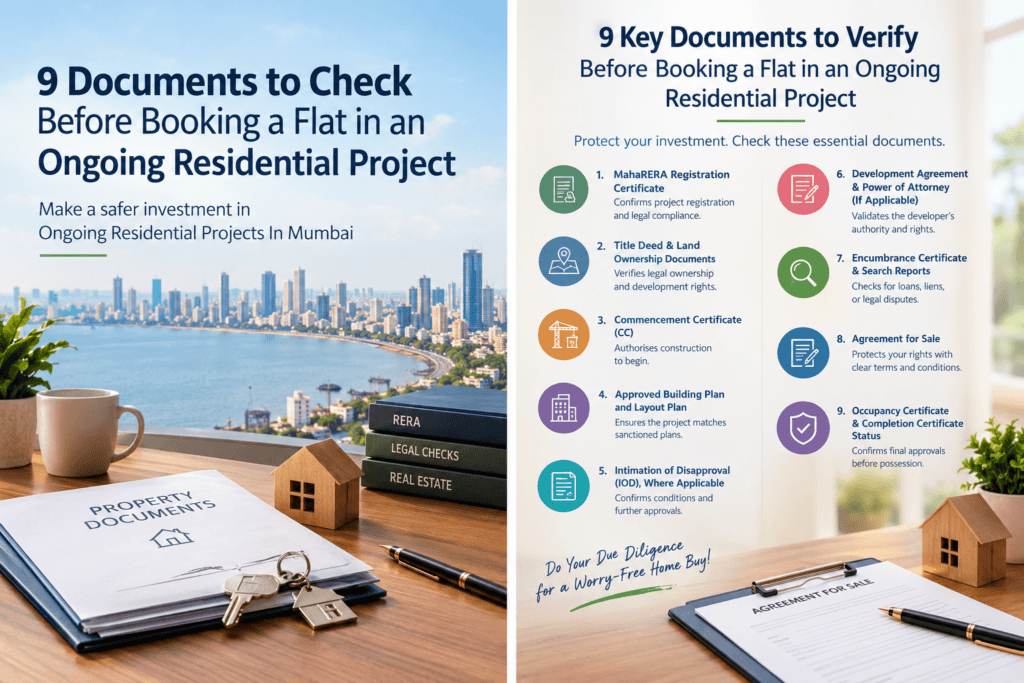
1. MahaRERA Registration Certificate
The Maharashtra Real Estate Regulatory Authority (MahaRERA) regulates eligible real estate projects in the state and provides important information to homebuyers. Before booking a flat, verify whether the project is registered with MahaRERA, where registration is required.
The registration details can help you check the project’s declared completion date, approved plans, developer information, and other disclosures.
What to check:
- MahaRERA registration number and project details.
- Name of the registered promoter or developer.
- Proposed completion date and project progress.
- Uploaded approvals, plans, and relevant disclosures.
- Details of complaints or regulatory orders, where available.
You can verify project information on the official MahaRERA website. Make sure the project name and registration number match the details provided by the developer.
Checking MahaRERA registration is an important first step when comparing Ongoing Residential Projects In Mumbai, as it helps you evaluate the project’s registration status and available disclosures.
2. Title Deed and Land Ownership Documents
The title deed and related land records help establish who legally owns the land on which the residential project is being developed. Before booking a flat, confirm that the developer has the necessary ownership rights or legally valid development rights.
In some projects, the landowner and developer may be different parties. In such cases, the development agreement and other supporting documents become particularly important.
What to check:
- The legal owner of the land.
- The chain of ownership and relevant title documents.
- Whether the developer has valid development rights.
- Any mortgages, liens, litigation, or other encumbrances affecting the property.
- Whether the land is subject to restrictions that could affect development.
A property lawyer can conduct a title search and review the relevant land records to identify potential risks. This step is particularly important for large residential developments involving multiple landowners or phased construction.
3. Commencement Certificate (CC)
A Commencement Certificate is an important approval issued by the relevant planning authority permitting construction to begin, subject to its terms and conditions.
For an ongoing residential project, check whether the developer has obtained the required commencement approval and whether the construction being carried out is covered by the approved certificate.
What to check:
- The issuing authority and certificate details.
- The approved building or construction phase.
- The floors and structures covered by the approval, where specified.
- Whether subsequent approvals are required for additional floors or phases.
Do not assume that approval for one building or phase automatically covers every building in a larger development. Ask the developer for the relevant documents applicable to the specific tower and flat you intend to purchase.
4. Approved Building Plan and Layout Plan
The approved building plan shows the building’s sanctioned design, while the layout plan provides an overview of the development, including buildings, access roads, open spaces, and other planned features.
These documents help you compare the developer’s promises with the officially approved plans.
What to check:
- The approved building layout and floor plans.
- The location and configuration of your proposed flat.
- The sanctioned number of floors.
- The location of parking areas, amenities, and access routes.
- Whether the proposed amenities and facilities are reflected in the approved plans, where applicable.
For projects with multiple towers, verify the plans for the particular building in which you are booking a flat. If the developer advertises facilities such as a clubhouse, landscaped gardens, or a swimming pool, clarify whether they are approved, proposed, or already available.
5. Intimation of Disapproval (IOD), Where Applicable
In Mumbai, an Intimation of Disapproval (IOD) is a term commonly used for a set of conditions issued by the relevant municipal authority before certain building permissions can be granted. The approval process and terminology may vary depending on the authority and project.
An IOD is not the same as an unconditional permission to commence all construction. It is important to understand which conditions have been fulfilled and which approvals remain outstanding.
What to check:
- The IOD or equivalent approval documents, where applicable.
- The conditions imposed by the relevant authority.
- Evidence that the applicable conditions have been fulfilled.
- The subsequent building permission or commencement approval.
Ask the developer to explain the current approval stage and provide copies of the relevant documents. A property lawyer or qualified professional can help determine whether the approvals are sufficient for the stage of construction.
6. Development Agreement and Power of Attorney, If Applicable
In some projects, the landowner appoints a developer to develop the property through a development agreement. A power of attorney may also authorise the developer or its representatives to perform specified acts relating to the project.
These documents are especially relevant when the developer does not directly own the land.
What to check:
- Whether the development agreement is valid and properly executed.
- The scope of the developer’s rights and responsibilities.
- Whether the agreement authorises the sale of flats, where applicable.
- Whether the power of attorney is valid and covers the relevant transactions.
- Whether any disputes or restrictions affect the development rights.
The existence of a development agreement alone does not automatically establish that every transaction is legally valid. Have a qualified property lawyer review the documents and confirm that the developer has the necessary authority to sell the flat.
7. Encumbrance Certificate and Relevant Search Reports
Before making a booking payment, investigate whether the land or project is affected by financial liabilities, mortgages, court cases, or other claims.
An encumbrance certificate or relevant land-record search may help identify certain registered transactions and encumbrances. However, the information covered depends on the record, authority, and search period. It should not be treated as conclusive proof that a property has no legal issues.
What to check:
- Registered mortgages or charges affecting the property.
- Relevant land-record and registration searches.
- Pending litigation or disputes involving the land or project.
- Whether any lender has rights over the property.
- If the project is financed, what arrangements exist for releasing the specific flat from any applicable mortgage or charge.
If the project land is mortgaged, request clarification about the lender’s consent and the process for releasing the flat from the charge, if required. A legal professional can help conduct a more comprehensive search.
8. Agreement for Sale
The Agreement for Sale is one of the most important documents in a flat purchase. It records the terms agreed upon by the buyer and developer and should be carefully reviewed before signing or making substantial payments.
Under applicable real estate regulations, the agreement should set out important details about the property, price, payment schedule, possession, and the parties’ obligations.
What to check:
- The exact flat number, floor, tower, and carpet area.
- The total consideration and itemised additional charges.
- The payment schedule and construction-linked payment terms, if applicable.
- The proposed possession date and applicable delay-related provisions.
- Specifications, amenities, parking arrangements, and common-area rights.
- Cancellation terms, refund conditions, and consequences of payment defaults.
- Defect-related obligations and other applicable buyer protections.
Ensure that the agreement accurately reflects the representations made by the developer. Do not rely solely on a brochure, verbal assurance, or booking form when an important promise should be included in the contractual documents.
Have an independent property lawyer review the agreement before signing. Also confirm that the agreement is registered as required by applicable law.
9. Occupancy Certificate and Completion Certificate Status
For an ongoing project, the Occupancy Certificate (OC) and Completion Certificate (CC) may not yet have been issued for the building under construction. Nevertheless, understanding their status and the approvals required before possession is essential.
A Completion Certificate generally relates to the completion of construction in accordance with applicable approvals. An Occupancy Certificate indicates that the relevant authority has permitted occupation, subject to the terms of the certificate.
What to check:
- Whether the project has received any completion approvals for the relevant phase.
- Whether an Occupancy Certificate has been issued for any completed building or phase.
- Whether the promised possession date allows sufficient time for the required approvals.
- Whether the developer has explained the process for obtaining the applicable certificates before possession.
For a flat in an ongoing project, ask the developer to confirm the expected timeline for obtaining the required certificates. Do not assume that a completed-looking building is automatically approved for occupation.
Where possession is offered, verify that the necessary occupancy permissions apply to your specific building and unit before accepting possession.
Additional Tips for Choosing a Reliable Residential Developer
Document verification is only one part of buying a home. You should also assess the developer’s track record and ability to deliver the project as promised.
When comparing Real Estate Developers In Mumbai, consider the following factors:
- Previous project delivery: Review the completion history of earlier projects and check for repeated possession delays.
- Construction quality: Visit completed developments, where possible, to assess the quality of materials, finishing, and maintenance.
- Financial transparency: Request a clear breakdown of the property price, taxes, statutory charges, and other fees.
- MahaRERA history: Review the developer’s registered projects, disclosed progress, and relevant regulatory orders or complaints.
- Customer feedback: Look for consistent feedback from existing buyers, while verifying serious allegations independently.
- Written commitments: Ensure that important promises about amenities, specifications, and possession are documented.
A transparent developer should be willing to explain the approval process and provide the relevant documents for review.
Conclusion
Buying a flat in an under-construction project can be an important step towards owning your dream home. However, a careful review of the legal and construction-related documents can help you identify risks before committing your savings.
Before booking a flat, verify the MahaRERA registration, land title, commencement permissions, sanctioned plans, development rights, encumbrances, Agreement for Sale, and the status of completion and occupancy approvals.
If you are exploring Ongoing Residential Projects In Mumbai, take time to compare the available documentation and seek independent legal advice before signing. Researching the credentials of Real Estate Developers In Mumbai can also help you make a more informed decision.
A little due diligence today can help you move towards homeownership with greater confidence and clarity.
Frequently Asked Questions (FAQs)
1. Which documents should I check before booking a flat in an ongoing residential project in Mumbai?
Before booking a flat, check the MahaRERA registration details, land title documents, Commencement Certificate, approved building plans, development agreement (if applicable), relevant encumbrance records, and Agreement for Sale. You should also verify the status of completion and occupancy approvals applicable to the project.
2. How can I verify whether an ongoing residential project in Mumbai is RERA registered?
Visit the official MahaRERA website and search using the project’s name, registration number, or developer’s name. Review the registration details, declared completion date, project progress, uploaded approvals, and available complaint or order information before making a booking decision.
3. Is it safe to buy a flat in an ongoing residential project?
Buying an under-construction flat can be a reasonable option if you conduct proper due diligence. Verify the project’s legal approvals, land title, MahaRERA details, developer’s track record, construction progress, and Agreement for Sale. Consult an independent property lawyer before signing any documents.
4. Is an Occupancy Certificate required before booking a flat in an ongoing project?
An Occupancy Certificate is generally associated with permission to occupy a completed building or relevant phase, rather than being a prerequisite for booking every under-construction flat. However, the required approvals depend on the project’s stage and applicable regulations. Verify that the necessary occupancy permissions are obtained before taking possession.
5. Why should I check the Commencement Certificate before buying a flat?
The Commencement Certificate confirms that construction has been permitted by the relevant authority within the scope of the approval. Checking it helps you understand whether the proposed building or construction phase is authorised and whether additional approvals are required.
6. How can I choose reliable real estate developers in Mumbai?
Compare the developer’s previous project deliveries, construction quality, MahaRERA records, customer feedback, financial transparency, and compliance history. Also verify that the developer has the necessary land ownership or development rights and can provide the relevant project approvals.
7. What should I check in an Agreement for Sale before signing?
Verify the flat number, carpet area, total price, additional charges, payment schedule, possession date, amenities, cancellation terms, and applicable delay-related provisions. Ensure that all important promises are included in the written agreement and have the document reviewed by a property lawyer.
8. Can I get a home loan for an ongoing residential project in Mumbai?
Yes, eligible buyers may obtain home loans for under-construction properties, subject to the lender’s eligibility criteria, property assessment, and documentation requirements. Lenders may review project approvals, legal title, construction progress, and other relevant documents before approving a loan.
9. What are the risks of buying a flat without verifying property documents?
Skipping document verification can expose buyers to risks such as unclear land ownership, unauthorised construction, undisclosed financial liabilities, contractual disputes, and possession delays. Reviewing the documents with a qualified property lawyer can help identify potential issues before you invest.
10. Where can I find ongoing residential projects in Mumbai?
You can explore developer websites, property portals, and the official MahaRERA website to research ongoing residential projects in Mumbai. Compare locations, prices, amenities, construction progress, registration details, and the developer’s track record before shortlisting a property.
Disclaimer: This article is for general informational purposes only and does not constitute legal advice. Document requirements vary according to the location, planning authority, project structure, and stage of development. Consult a qualified property lawyer and verify the relevant approvals with the competent authorities before purchasing a property.